As the festive lights fade and the new year settles in, January often brings a moment of reflection – especially when it comes to our finances. After the whirlwind of December spending on gifts, gatherings, and goodies, many of us find ourselves reviewing bank statements with a mix of surprise and resolve. It’s the perfect time to focus on financial wellness: that sense of security and control over your money that lets you enjoy life without constant worry.
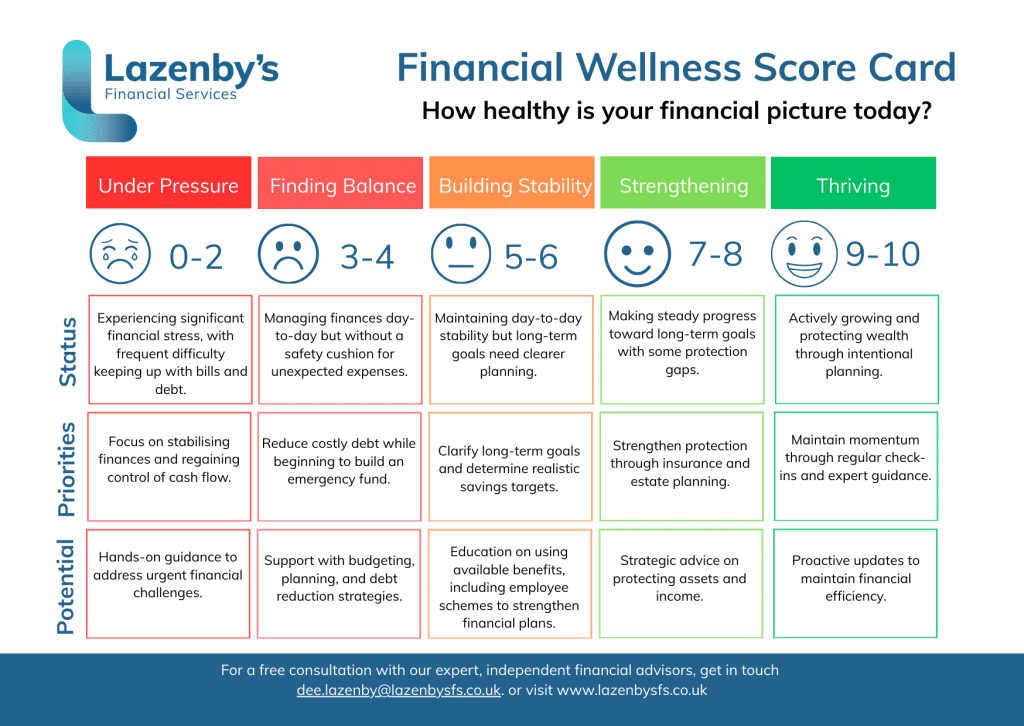
At Lazenby’s Financial Services, we believe financial wellness isn’t just about numbers on a spreadsheet – it’s about building resilience, planning for the future, and making smart choices that align with your lifestyle. Our Financial Wellness Score Card is a simple tool we’ve developed to help you gauge where you stand today. It prompts you to assess your current status (like savings, debts, and income) and identify potential priorities (such as building an emergency fund or optimizing investments). If you’ve downloaded our score card, take a few minutes to fill it in – it’s a straightforward way to get a snapshot of your financial health.
Why January is the Ideal Time to Start
The post-holiday period is when motivation is high for fresh starts. According to recent insights from financial experts, over 40% of people set money-related goals in January, from cutting back on expenses to boosting savings.
But without a clear plan, those good intentions can fade by February. That is where focusing on wellness comes in – it’s about sustainable habits, not quick fixes.
Here are some practical steps to kickstart your financial wellness this month, tailored for the everyday person juggling bills, family, and the occasional treat:
1. Review Your Spending Habits: Look back at December’s outgoings. Categorize them into essentials (rent, groceries) and non-essentials (that extra takeaway or impulse buy). Tools like free budgeting apps can help track this. Ask yourself: Where can I trim without feeling deprived? Even small changes, like brewing coffee at home, can add up to hundreds over the year.
2. Assess Your Debt Situation: If credit card bills from the holidays are looming, prioritize high-interest debts first. Consider the ‘snowball’ method – paying off smallest debts to build momentum – or the ‘avalanche’ approach for interest savings. If debts feel overwhelming, consolidating them into a lower-rate loan might be worth exploring, but always check the terms.
3. Build or Boost an Emergency Fund: Aim for 3-6 months’ worth of living expenses in an easy-access savings account. Start small if needed – even £50 a month can grow. This buffer provides peace of mind against unexpected costs, like a car repair or sudden bill.
4. Check Your Savings and Investments: Are your savings earning decent interest? With rates fluctuating, switching to a better account could make a difference. If you’re thinking longer-term, consider tax-efficient options like ISAs. And don’t forget pensions – contributing more now can significantly impact your retirement pot, especially with employer matches.
5. Set Realistic Goals: Use our Financial Wellness Score Card to pinpoint priorities. For example, if your status shows low savings, make ‘save £X per month’ your top goal. Track progress weekly to stay motivated.
Remember, financial wellness is personal. What works for a young family might differ from someone nearing retirement. The key is balance – enjoying today while securing tomorrow.
How We Can Help
If this sounds familiar but you’re unsure where to begin, our team at Lazenby’s is here to guide you. As independent financial advisors based in Leeds, we offer unbiased, bespoke advice on everything from pensions and investments to inheritance planning. Our approach is holistic, focusing on your unique goals and risk comfort level.
Why not start with a free, no-obligation consultation? We’ll review your Financial Wellness Score Card together and create a tailored plan to enhance your financial picture. Get in touch with Alan Lazenby at [email protected] or book directly via our website.
Here’s to a financially healthier 2026 – you’ve got this!